

GENERATIVE AI?
Date : 02-08-2024
Many people have heard of AI to some extent, and nowadays, there is increasing discussion about Generative AI. For those who are still unfamiliar with what Generative AI can do or how it can be useful, let’s explore together.
Generative AI, or Gen AI, is artificial intelligence designed to understand instructions and create new content in various forms, such as text, images, audio, video, and artwork.
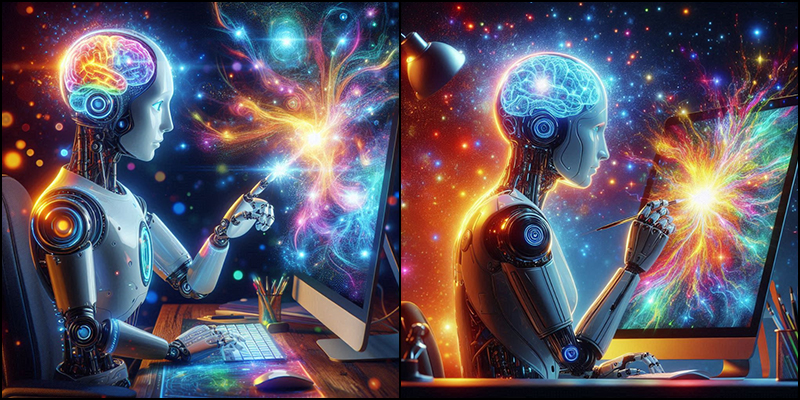
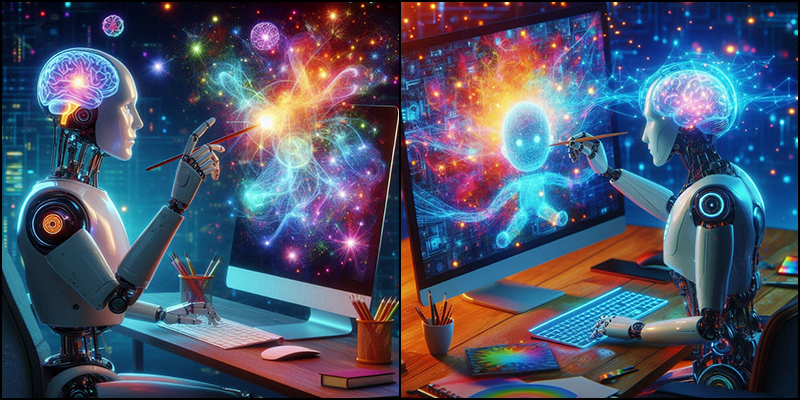
Generative AI concept pictures by DALL E3
Key Concepts of Generative AI
- Generative Models:
- Generative Adversarial networks (GANs) : GANs are a type of deep learning that works to generate new data that looks realistic, such as creating new images from given prompts.
- Variational Autoencoders (VAEs) : VAEs learn to encode data into a compressed format and then decode it back to its original form, which is useful for generating new data samples.
- Autoregressive Models: These models generate new data by predicting future values based on existing data.
- Training Process:
- Data Collection : Gathering existing data for training.
- Model Training : Training the model and improving accuracy.
- Evaluate and Fine – tuning : Assessing performance and refining the model for better results.
- Applications:
- Image Generation : Creating new images from existing data.
- Text Generation : Producing new text based on existing information.
- Music and Audio Generation : Composing new music or sounds.
- Ethical Considerations:
- Bias and Fairness : Ensuring fairness and minimizing bias in data.
- Privacy : Protecting the privacy of training data.
- Misuse : Preventing harmful uses, such as generating false information.
- Technological Challenges:
- Scalability : Adapting models to handle large-scale data.
- Computational Resources : Efficient use of computing power.
- Integration : Incorporating models into various systems.
Examples of Generative AI in Use
- Content Creation: Writing articles, poems, generating software code, and assisting in creative processes.
- Arts & Design: Helping designers create artwork and designs.
- Entertainment: Creating characters, scenes, and realistic special effects for games and movies.
Example: An AI-generated image based on the prompt “A workspace in outer space amidst an ocean with a moon in the background.”
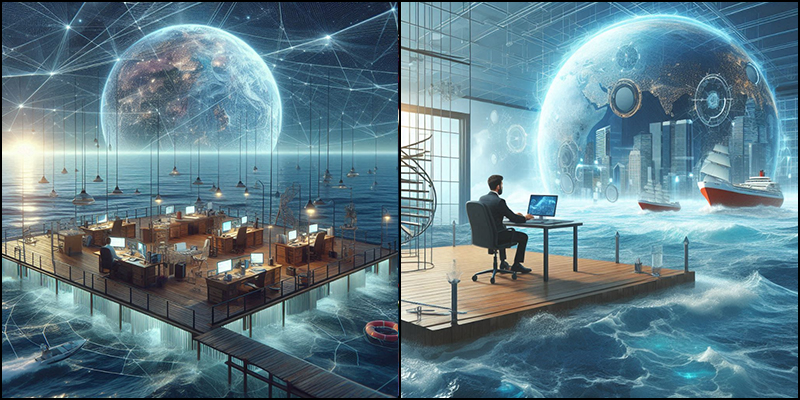
Generative AI is already this powerful—so how can we apply it in everyday life and work? Stay tuned for the next discussion!

" + NS Solutions" is register trade mark of NS Solutions corporation.
Other description about company name and product name are trademark or register trade mark of each companies.