

Business Email Compromise (BEC): Characteristics and Countermeasures for the Rapidly Increasing Fake Emails
Date : 30-06-2026
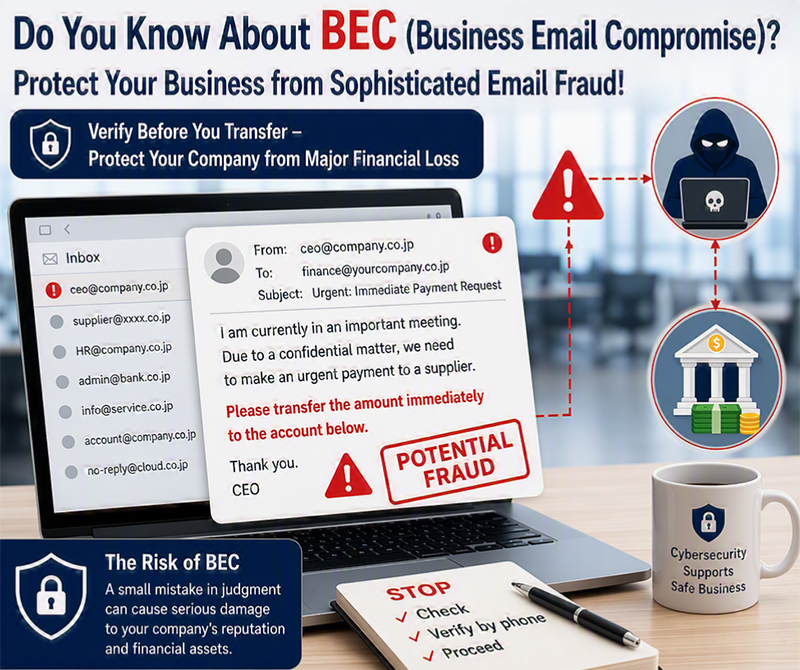
In today's world, where every business is digitized and driven by electronic communication, "email" has become an indispensable and primary tool for operational correspondence and financial transaction approvals. However, significant risks lurk behind this convenience. Criminals are developing increasingly sophisticated attack methods every year, causing immense damage to organizations worldwide. Currently, one of the most critical cyber threats that demands vigilance is Business Email Compromise (BEC), where attackers exploit an organization's email system to demand fraudulent money transfers.
Sophisticated BEC Tactics to Watch Out For
Business Email Compromise (BEC) does not necessarily rely on highly advanced hacking techniques. Instead, it is a fraud method that utilizes "social engineering" (psychological manipulation techniques that exploit human blind spots), artfully targeting human psychological vulnerabilities and organizational hierarchies. The primary targets are accounting and finance departments, which possess budget and remittance authorities. The most typical patterns frequently observed are as follows:
- Spoofed Executive Emails Criminals create names or email addresses that look identical to those of top executives, such as the CEO or CFO, and send messages that put psychological pressure on the finance department.
- Example : "I am currently in a highly confidential emergency meeting. There is a top-secret matter that requires immediate payment to this supplier. Please transfer money to the designated account as a matter of urgency." Due to the pressure of an instruction coming from a superior, there is no end to cases where employees comply with the remittance without conducting sufficient re-verification.
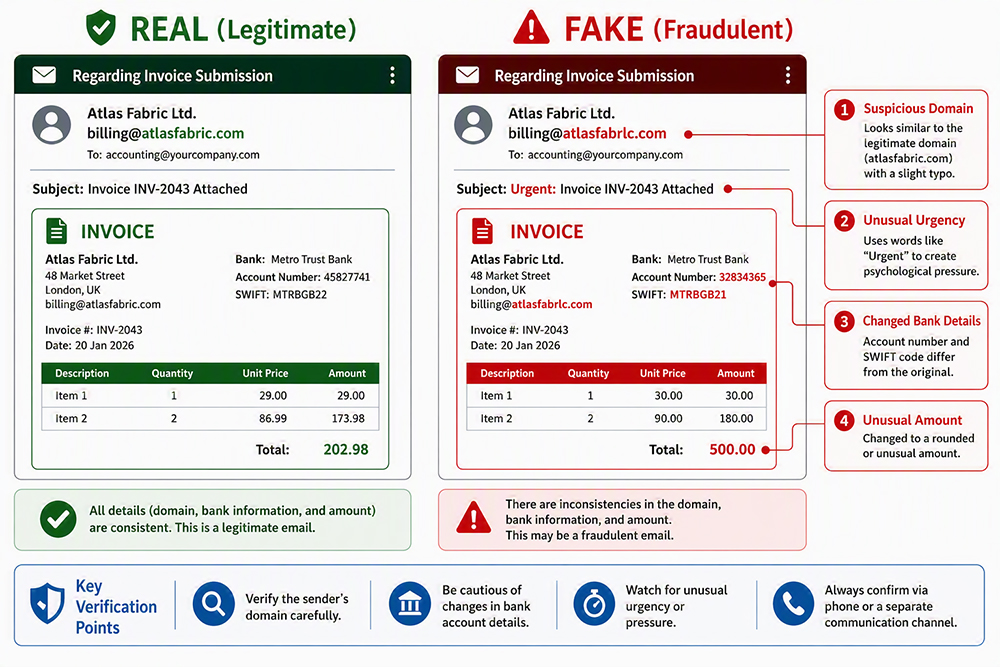
- Fake Supplier Invoices The criminal group either hijacks the email system of a supplier with whom the company actually conducts business or creates a highly sophisticated fake email address that is indistinguishable from the real one. Subsequently, they send a fake invoice stating something like, "Our receiving bank account has changed. Please make future payments to this new account." If the procurement or accounting department transfers the funds without directly confirming the facts via phone or other means, the entire amount flows directly into the criminal group's account.
4 Self-Check Methods to Detect and Guard Against BEC (Points of Verification)
Before executing a money, transfer or sending critical information, all employees—especially those in the procurement, accounting, and finance departments—must keep the following crucial points in mind and remain vigilant against signs of BEC on a daily basis:
- Thoroughly Verify the Sender's Email Domain Name (Check the Sender's Domain) Scammers use addresses that closely resemble the real ones. For example, they very frequently alter name@company.com to name@conpany.com (changing 'm' to 'n') or abuse free email services like Gmail or Hotmail instead of using a corporate domain, so close attention to detail is required.
- Be Alert to Content That Creates Unnatural Urgency or Pressure (Beware of High Pressure) If phrases such as "Top Priority," "Highly Confidential," or "Remittance required within 1 hour" are emphasized in an email, you should suspect it first. No procedures should be advanced until definitive verification is obtained.
- Establish an Internal Double-Verification Process (Verification Workflows) If you receive a notification about a change in a bank account for transfers or a request to send money to an unfamiliar account, you must absolutely never perform the verification by replying to that email. Always use the "traditional phone number" registered in your own company database to directly call the supplier's person in charge or your own company's management to verify the facts.
- Implement Security Awareness Training for Employees (Cybersecurity Training) It is important to regularly conduct simulated drills and training sessions across the entire organization based on the latest email fraud case studies. This nurtures the ability of individual employees to notice suspicious emails and establishes a system where they can promptly report them to the IT department upon discovery.
Achieving Advanced Security with THNS's Integrated Solutions
However, relying solely on employee vigilance to defend against today's increasingly sophisticated fraud techniques has its limits. THNS provides advanced cybersecurity solutions to comprehensively protect your organization's email system and close security vulnerabilities.
- Advanced Email Security Gateways Using an intelligent email filtering system, it detects and blocks spoofed domains, spam emails, and other suspicious behaviors, eliminating threats before they ever reach an employee's inbox.
- Multi-Factor Authentication (MFA) MFA is mandated for accessing internal email systems and other infrastructure. This strongly prevents unauthorized external logins even in the event that a password is leaked.
- Expert Security Consultation THNS's team of experts analyzes and designs your business workflows and provides "Cybersecurity Awareness Training" that complies with international standards, transforming your employees into the organization's strongest line of defense.
Let's Build a Robust Cybersecurity Framework Together
A single mistake caused by email fraud can shake the very foundation of a company's management and lead to the loss of socially built credibility. Choose THNS as your trusted partner to protect your corporate IT infrastructure and email systems.
Please feel free to contact the THNS expert team for a free consultation


" + NS Solutions" is register trade mark of NS Solutions corporation.
Other description about company name and product name are trademark or register trade mark of each companies.